The Lifecycle of a Disconnected Phone Number
When you let a number go, where does it actually go? From carrier aging quarantine to thousands-block pools.
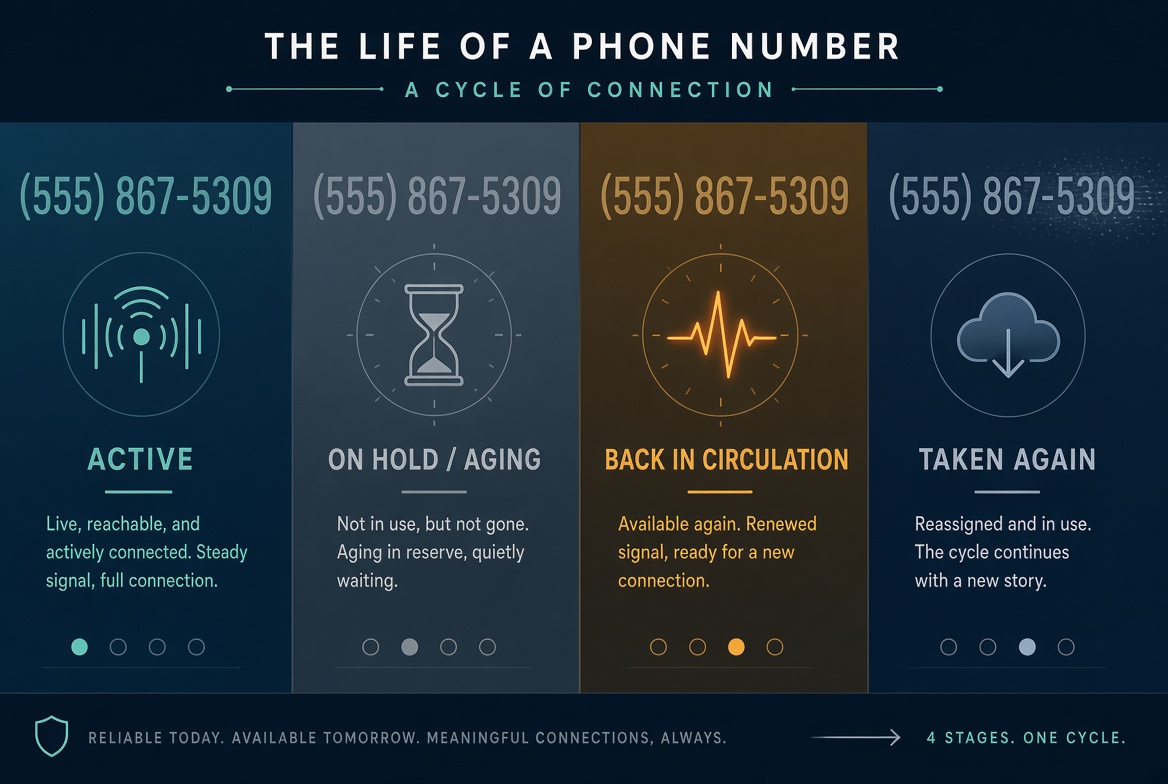
1. The Immediate Disconnect
When you cancel service or port out, the switch removes the subscriber routing entry. Calls to the number immediately hit a intercept tone ("The number you have dialed is no longer in service").
At this point, the number is not dead. It enters a federally mandated and carrier-enforced quarantine interval known as aging.
2. The Aging Quarantine (45–90 Days)
Under FCC numbering rules (47 CFR § 52.15), carriers are permitted to hold a residential or wireless number in aging status for up to 90 days. For commercial or business lines, this window can extend up to 365 days under specific tariff filings.
The purpose of aging is collision mitigation: clearing residual spam, automated debt collection calls, and errant two-factor authentication SMS messages so they do not instantly harass the next assignee.
3. Return to the Provider Inventory or Pool
Once the aging clock expires, if the thousands-block (NPA-NXX-X) is retained by the operating company (OCN), the number returns to the carrier’s general unassigned inventory pool to be handed out to the next customer who activates a SIM card or eSIM.
If the entire block was donated back to Somos / Pooling Administration, the block may be reassigned to an entirely different competitive local exchange carrier (CLEC) or wireless provider.
Looking to recover or track a specific phone number?
Use our free reverse lookup engine to audit its thousands-block allocation, or subscribe to automated monitoring for instant pool return alerts.