What actually happens to your old phone number after you cancel it
It doesn't vanish. It goes into a holding period, then gets handed to a stranger — and if your old accounts still point at it, that's a real problem. Here's the full picture, and what to do before you let a number go.
Last reviewed: July 2026
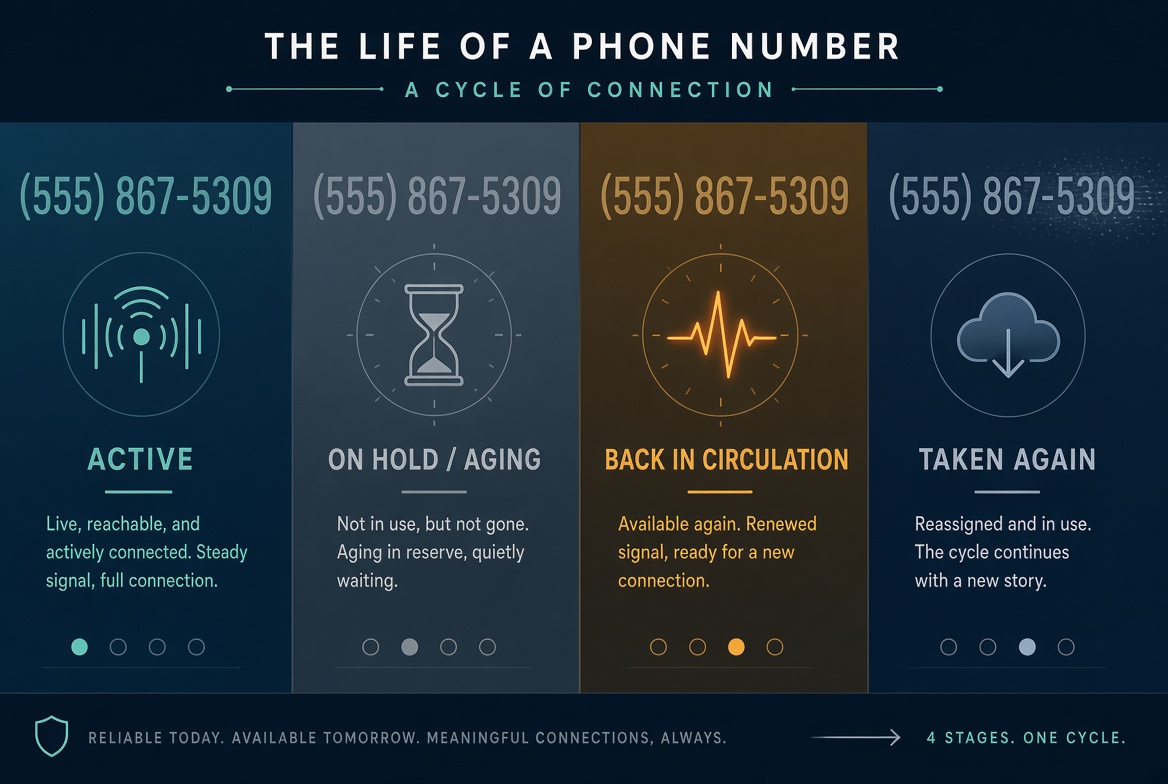
Most people assume a cancelled phone number is simply switched off forever. It isn't. In North America, phone numbers are a shared, finite public resource administered under the North American Numbering Plan, and carriers are expected to put used numbers back into circulation rather than retire them. So when you cancel a line or leave a number behind while switching carriers, it enters a fairly predictable lifecycle — and understanding that lifecycle is the difference between a clean exit and months of headaches.
Step one: the "aging" period
When a number is disconnected, it isn't reassigned the next day. It first goes into what the industry calls an aging or quarantine period, during which it sits idle and unassigned. The purpose is to let the previous owner's calls, texts, and account associations taper off before someone new inherits the line.
There is no single nationwide number that every carrier uses. Industry guidelines set a minimum aging window — historically on the order of 45 days — but individual carriers often hold numbers considerably longer, sometimes several months, depending on how many spare numbers they have in a given area code. The takeaway isn't the exact figure; it's that the window is finite and shorter than most people expect. You should not assume a number you gave up last month is still "yours" in any protected sense.
Step two: reassignment to a new subscriber
Once the aging period ends, the number returns to the carrier's available pool and can be assigned to a brand-new customer. That new person now receives every call and text sent to that number — including anything still tied to your old life.
The part almost nobody plans for: two-factor codes and account recovery
The biggest modern risk with an abandoned number isn't missed calls from old friends — it's security. Over the years you've probably attached your phone number to dozens of accounts as a login method or a password-reset fallback: your bank, your email, social media, shopping sites. If you cancel the number without unlinking it first, those accounts keep pointing at it.
When that number is reassigned, the new owner can potentially receive your two-factor authentication codes and password-reset texts. In documented cases, people have discovered they could reset accounts belonging to a number's previous owner simply because the accounts were never updated. This is a well-recognized weakness; the U.S. Federal Trade Commission and security researchers have both warned about the "recycled number" problem for exactly this reason.
It cuts the other way too: if you're the one receiving a recycled number, you may get login codes, spam, and debt-collection calls meant for whoever had it before you. That's not a glitch — it's the predictable result of the number lifecycle.
Can you get an old number back after it's gone?
Sometimes, but the window is narrow and it's not guaranteed. While a number is still active or freshly disconnected, your carrier may be able to restore it or let you port it out. Once it has fully aged out and been reassigned to someone else, it is effectively gone — a carrier cannot take a working number away from its new owner to give it back to you. If a specific number matters to you, the time to act is before you cancel, not after.
What to do before you let a number go
If you're about to cancel a line or switch carriers, a little cleanup beforehand prevents almost all of the problems above:
- Unlink the number from your accounts first. Go through your important logins — email, banking, social — and either remove the old number or replace it with your new one, especially anywhere it's used for two-factor authentication or password resets.
- Decide whether you actually want to keep the number. If you do, you can usually port it to your new carrier, or park it cheaply on a service like Google Voice, instead of letting it lapse. Porting must be started while the number is still active.
- Update the people and services that matter. Tell key contacts, and update the number on file with any service that texts you codes or appointment reminders.
- Turn off or forward, don't just abandon. If you're leaving a number behind, make sure nothing important still depends on receiving messages at it.
The short version
Your old number is aged for weeks to months, then reassigned to a stranger who inherits anything still tied to it. The real danger is security codes and account recovery, not nostalgia. Clean up your accounts and decide the number's fate before you cancel, and the whole process becomes a non-event.
More guides on this site
- How long until a disconnected number is reassigned?
- How to keep your old number before you cancel
- Porting your number to Google Voice, step by step
- Unlink your number from 2FA before you cancel it
- Got someone else's recycled number? What to do
- Stop iMessage & WhatsApp from eating your texts after a number change
- The truth about reverse phone lookup
- Changing your number: the full who-to-tell checklist
- What happens to a phone number after someone dies